Klyvara
Frame Set
Frame Set
Couldn't load pickup availability
Self-paced learning overview
- 📥 Digital file available after purchase
- ♾️ Long-term availability
- 🔒 Secure checkout
- 🗓️ Content updated in 2026
1. Problem Statement
Struggling to see the full picture when digital risks are discussed separately? You’re not alone: messages, accounts, files, devices, and network connections are often treated as unrelated elements. This can make it possible to notice one issue without understanding how it connects to the wider environment. Without a structured map, it is difficult to identify where important information is stored, who works with it, and which events need closer review. This fragmented approach can make risk evaluation and protective planning less consistent.
2. Solution
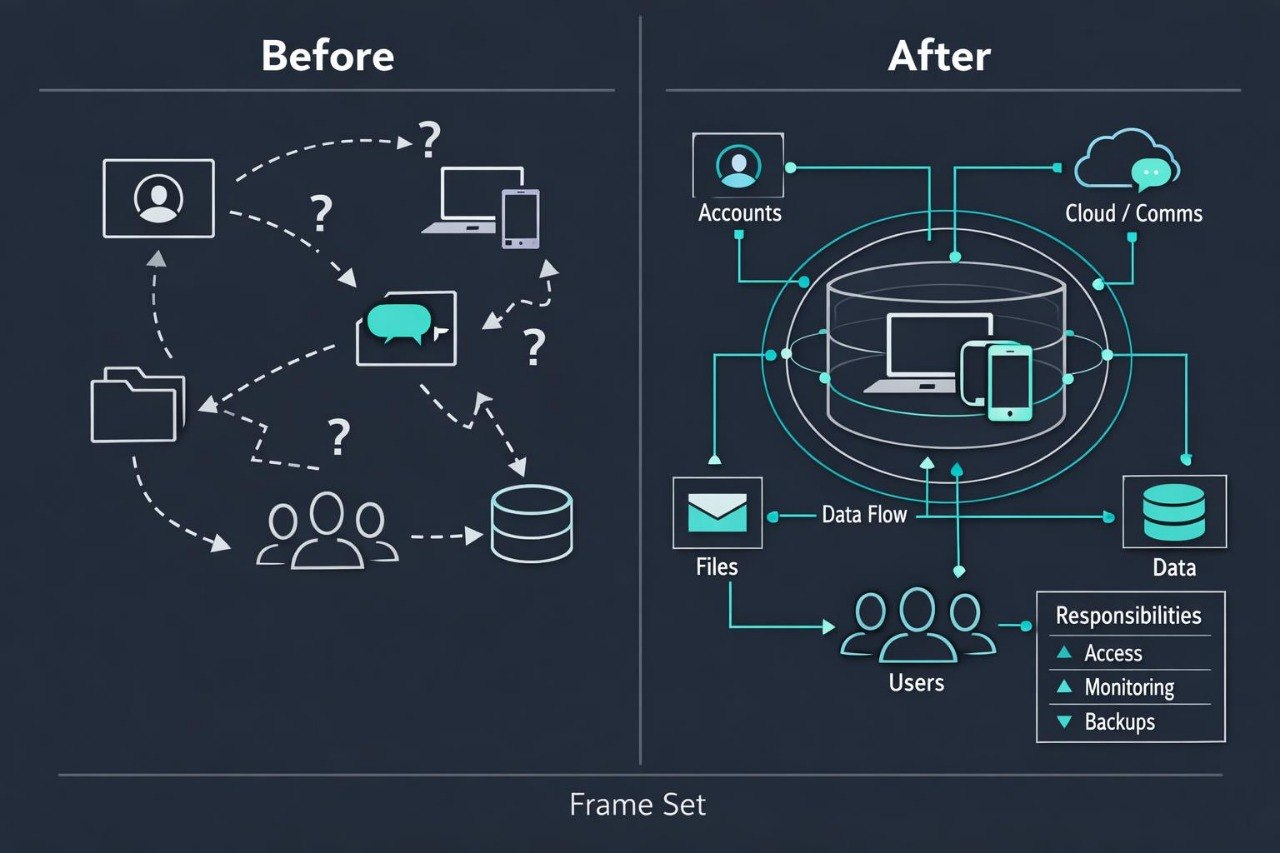
This course will teach you to describe a digital environment through clear components, relationships, and areas of responsibility. You will learn to create data maps, identify important interaction points, and locate areas where unwanted events may occur. The materials help separate observations, assumptions, and confirmed facts. Practical tasks include diagrams, tables, and connected scenarios without referring to named third-party software. By the end of the course, you will create a personal digital environment model and a checklist for reviewing it regularly.
3. What’s Inside
Module 1: Digital Environment Mapping
You will identify the main parts of a digital environment, including accounts, devices, data, transfer channels, and the people who interact with them. The module shows how scattered details can be organized into one readable map.
Module 2: Data Location and Movement
Learners examine where information is created, stored, and transferred. You will prepare a data-flow diagram and mark stages that require closer attention.
Module 3: Roles and Responsibilities
This module explains how assigned responsibilities influence information protection. You will document who creates, changes, reviews, and responds to events involving different types of data.
Module 4: Risk Classification Frames
You will study criteria for reviewing the likelihood and possible impact of an event. Exercises help categorize situations by attention level without exaggerating or overlooking important details.
Module 5: Protective Layers
The module examines how organizational rules, careful behavior, and technical measures work together. You will see why one isolated measure does not create a complete protective structure.
Module 6: Scenario Connection Workshop
Learners work with several connected events and determine their sequence. Tasks focus on identifying the starting point, intermediate signals, and possible consequences.
Module 7: Personal Security Framework
In the final module, you will create a reusable template for reviewing accounts, information, roles, and suspicious events. The template includes guiding questions and a concise documentation form.
4. Who Is This For?
✅ This plan is suitable if you:
- want to understand connections between digital risks;
- work with several types of information;
- want to create organized diagrams and review structures;
- already understand foundational cybersecurity terminology;
- value practical work with maps, tables, and scenarios.
❌ This plan may not suit you if you:
- are seeking materials for conducting attacks;
- do not intend to complete analytical tasks;
- expect only a short list of general recommendations;
- need highly technical analysis of large infrastructure;
- are looking for claims about employment or predetermined outcomes.
5. What You’ll Learn
After completing the materials, you will be able to:
- identify at least five parts of a digital environment;
- create one complete data-flow map;
- assign responsibilities across four common roles;
- review six scenarios by attention level;
- mark important information-transfer points;
- separate confirmed facts from assumptions;
- prepare a layered protective action framework;
- create a reusable review template;
- explain the connection between an event, response, and possible consequence.
6. Payment and Refund Terms
A refund request for Frame Set may be submitted within 30 calendar days of purchase. Each request is reviewed according to the conditions published in the store’s Refund Policy. Learners should review the course structure, module list, and purchase terms before placing an order.
7. Certificate
After completing all seven modules and the required knowledge checks, the learner receives a digital Frame Set certificate. It records the course title and completion date.
What format do the courses use?
What format do the courses use?
Klyvara courses contain sequential modules, written explanations, diagrams, learning scenarios, knowledge checks, and practical tasks. The exact materials depend on the selected plan and are listed on its page.
Do I need previous cybersecurity knowledge?
Do I need previous cybersecurity knowledge?
Previous preparation is not required for introductory plans. The materials begin with foundational concepts and gradually move toward digital risk analysis, information protection, and responses to suspicious events.
How long does a course take?
How long does a course take?
Each learner chooses their own study pace. Modules can be reviewed separately, previous explanations can be revisited, and learning tasks can be completed again when needed.
Is a certificate provided?
Is a certificate provided?
Yes. A certificate of completion is provided after all modules and required knowledge checks have been completed. It includes the course title and completion date.
Share