Klyvara
Free Kit
Free Kit
Couldn't load pickup availability
Self-paced learning overview
- 📥 Digital file available after purchase
- ♾️ Long-term availability
- 🔒 Secure checkout
- 🗓️ Content updated in 2026
1. Problem Statement
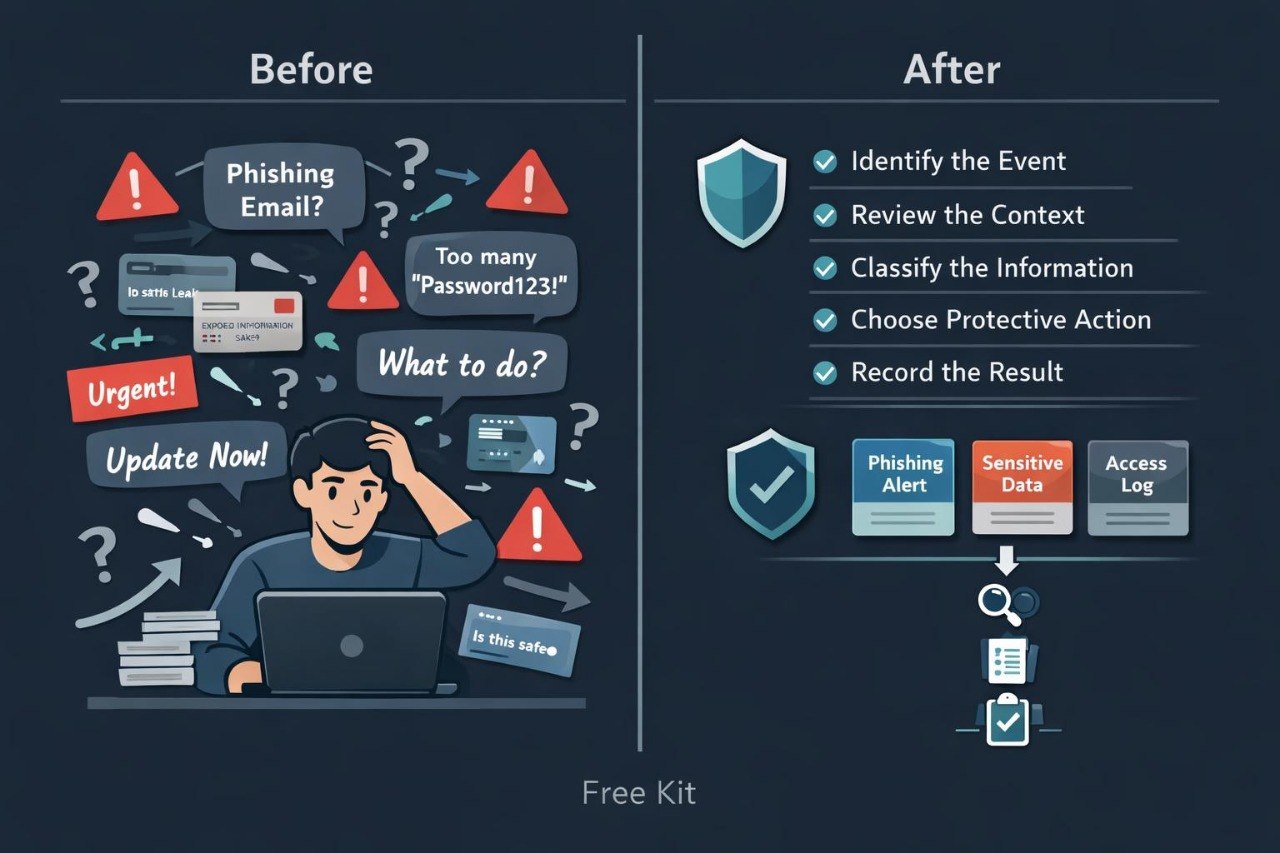
Struggling to understand where cybersecurity learning should begin? You’re not alone: the number of terms, threats, and recommendations can create confusion from the first stage. People use digital services every day but may not recognize which actions increase exposure of their information. A suspicious message, weak password, or careless data request may not receive enough attention. Without a clear foundation, it can be difficult to separate an ordinary event from one that requires further review.
2. Solution
This course will teach you to view digital security as a connected system of decisions and habits. You will explore core threat categories and principles for protecting personal information. The materials explain how to review messages, links, data requests, and unusual account activity. Learning scenarios help you apply each concept to realistic situations without relying on named third-party software. After completing the course, you will be able to prepare a personal digital security plan.
3. What’s Inside
Module 1: Digital Security Foundations
You will learn what cybersecurity covers, which types of information require protection, and why human decisions are an important part of digital security. The module explains the differences between a threat, vulnerability, event, and consequence.
Module 2: Personal Data and Digital Footprints
Learners examine how personal information accumulates during everyday online activity. The module covers data categories, common disclosure situations, and methods for reviewing requests for personal details.
Module 3: Suspicious Messages and Social Engineering
This module examines messages designed to create pressure, curiosity, or fear. You will learn how to review context, sender details, wording, attachments, and the purpose behind a request.
Module 4: Password and Account Habits
You will study principles for creating separate password phrases, handling account information, and reviewing unusual activity. A separate section explains why reusing the same credentials across different services can create additional exposure.
Module 5: First Response to a Suspicious Event
This module presents a structured response after receiving a questionable message, losing account details, or noticing unfamiliar activity. Learners create a short response plan and a list of information that should be documented.
4. Who Is This For?
✅ This plan is suitable if you:
- are beginning your cybersecurity studies;
- want to organize foundational terminology;
- want to handle personal data more carefully;
- want to review suspicious messages more consistently;
- are looking for an introductory course with practical scenarios.
❌ This plan may not suit you if you:
- expect advanced analysis of complex network environments;
- are seeking materials about harmful code development;
- require instruction for conducting attacks;
- already work regularly with advanced cybersecurity procedures;
- are looking for employment claims or predetermined outcomes.
5. What You’ll Learn
After reviewing the materials, you will be able to:
- explain the difference between a threat, vulnerability, and incident;
- identify at least five signs of a suspicious message;
- classify personal information by sensitivity;
- create a ten-point digital security checklist;
- describe four foundational responses to a suspicious event;
- examine three learning scenarios;
- prepare a personal process for reviewing unusual requests;
- identify everyday digital habits that may need revision.
6. Payment and Refund Terms
Free Kit is provided without payment, so no charge is collected and no refund applies to this plan.
For paid Klyvara courses, a refund request may be submitted within 30 calendar days of purchase. Requests are reviewed according to the conditions stated on the store’s Refund Policy page.
7. Certificate
After completing every module and required knowledge check, the learner receives a digital certificate of completion for Free Kit. The certificate records the course title and completion date.
What format do the courses use?
What format do the courses use?
Klyvara courses contain sequential modules, written explanations, diagrams, learning scenarios, knowledge checks, and practical tasks. The exact materials depend on the selected plan and are listed on its page.
Do I need previous cybersecurity knowledge?
Do I need previous cybersecurity knowledge?
Previous preparation is not required for introductory plans. The materials begin with foundational concepts and gradually move toward digital risk analysis, information protection, and responses to suspicious events.
How long does a course take?
How long does a course take?
Each learner chooses their own study pace. Modules can be reviewed separately, previous explanations can be revisited, and learning tasks can be completed again when needed.
Is a certificate provided?
Is a certificate provided?
Yes. A certificate of completion is provided after all modules and required knowledge checks have been completed. It includes the course title and completion date.
Share