Klyvara
Pulse Pack
Pulse Pack
Couldn't load pickup availability
Self-paced learning overview
- 📥 Digital file available after purchase
- ♾️ Long-term availability
- 🔒 Secure checkout
- 🗓️ Content updated in 2026
1. Problem Statement
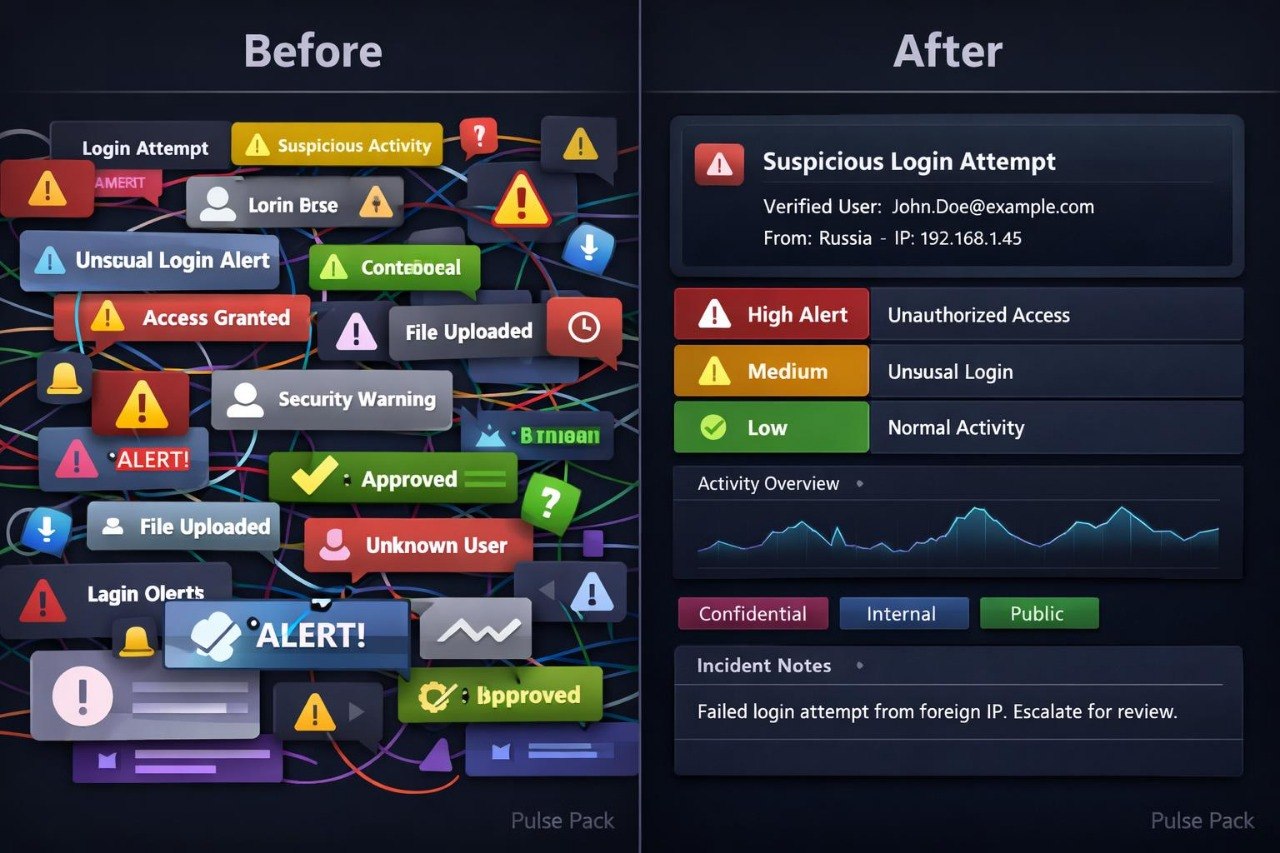
Struggling to determine which digital events require closer attention? You’re not alone: questionable messages, unfamiliar requests, and unusual activity can resemble ordinary daily interactions. Without clear criteria, people may overlook meaningful signs or spend too much time examining harmless situations. Separate rules without an organized process do not always support thoughtful decisions. Careful review requires a system that combines observation, context verification, and event documentation.
2. Solution
This course will teach you how to examine digital signals and determine their level of importance. You will study common manipulation methods, signs of unusual behavior, and principles for careful data handling. Each module combines structured explanations with short situational tasks. You will learn to separate confirmed facts from assumptions and record the main details of an event. By the end of the course, you will prepare a personal framework for reviewing suspicious situations.
3. What’s Inside
Module 1: Threat Signals and Context
You will learn to recognize signals that may indicate a digital threat. The module explains why one sign is rarely enough and how several details should be reviewed together.
Module 2: Message Review Framework
Learners examine message structure, tone, information requests, attachments, and external links. Tasks help create an organized review sequence before any action is taken.
Module 3: Identity and Request Verification
This module explains how to review sender identity and confirm whether a request is reasonable through a separate communication channel. Changes in contact details and unusual requests are also examined.
Module 4: Account Activity Review
You will learn which account changes should be recorded and compared with normal activity. Learners will create a concise observation log.
Module 5: Data Handling Decisions
The module covers information classification, reducing unnecessary disclosure, and reviewing who needs specific information and why.
Module 6: Incident Notes and First Actions
You will learn to record timing, event order, message content, and actions already taken. The final task involves creating a personal first-response card.
4. Who Is This For?
✅ This plan is suitable if you:
- understand foundational cybersecurity concepts;
- want to review suspicious situations more carefully;
- regularly handle messages and personal information;
- want a structured verification process;
- value practical scenarios and checklists.
❌ This plan may not suit you if you:
- are seeking instructions for conducting attacks;
- expect advanced technical analysis of complex infrastructure;
- do not intend to complete practical tasks;
- require employment claims or predetermined outcomes.
5. What You’ll Learn
After completing the materials, you will be able to:
- identify at least seven signs of a suspicious event;
- apply a six-step message review process;
- classify information across three sensitivity levels;
- examine five situational examples;
- create an unusual-activity log;
- prepare a first-response card;
- separate confirmed facts from assumptions;
- explain when an event should receive further review.
6. Payment and Refund Terms
A refund request for Pulse Pack may be submitted within 30 calendar days of purchase. Each request is reviewed under the conditions published on the store’s Refund Policy page. Learners should review the course outline and purchase terms before placing an order.
7. Certificate
After completing all six modules and the required knowledge checks, the learner receives a digital Pulse Pack certificate. The certificate includes the course title and completion date.
What format do the courses use?
What format do the courses use?
Klyvara courses contain sequential modules, written explanations, diagrams, learning scenarios, knowledge checks, and practical tasks. The exact materials depend on the selected plan and are listed on its page.
Do I need previous cybersecurity knowledge?
Do I need previous cybersecurity knowledge?
Previous preparation is not required for introductory plans. The materials begin with foundational concepts and gradually move toward digital risk analysis, information protection, and responses to suspicious events.
How long does a course take?
How long does a course take?
Each learner chooses their own study pace. Modules can be reviewed separately, previous explanations can be revisited, and learning tasks can be completed again when needed.
Is a certificate provided?
Is a certificate provided?
Yes. A certificate of completion is provided after all modules and required knowledge checks have been completed. It includes the course title and completion date.
Share